“Global coffee producing area” search results (800)

Global Coffee producing area Guatemala Coffee Market
In 1750, Father Jesuit introduced coffee trees to Guatemala, where the coffee industry was developed by German colonists at the end of the 19th century. Today, most of the coffee industry's production takes place in the south of the country. Coffee production in Guatemala: the slopes of SierraMadre volcano provide ideal conditions for growing high-quality coffee beans at high altitudes.
2015-08-24 Global Coffee Origin Guatemala Market 1750 Jesu Jet J.
Global coffee producing area-Zambia
Coffee was introduced to Zambia (Zambia) from Kenya and Tanzania in the early 20th century. The origin of Zambian coffee: Zambian coffee is mainly grown in the northern Kasama region and in the Nakonde and Isoka areas near the capital Lusaka. Giant coffee beans and bean-shaped berry coffee beans are also produced. The characteristics of Zambian coffee:
2014-07-09 Zambia coffee producing area boutique coffee
Global Coffee producing area-China
Coffee trees are also planted in China. However, since there are no production statistics, no one knows for sure how many coffee trees there are in China and how much coffee they can produce.
2014-06-17 Coffee knowledge Coffee Encyclopedia Coffee producing area Chinese Coffee
Suriname, a global coffee producer
Suriname (Surinam) was the first country in South America to grow coffee. The Dutch who settled in Suriname in 1667 introduced coffee trees from Java in the early 18th century. The first coffee trees were given by the mayor of Amsterdam to a Flemish pirate, a Hansback. To be exact, these coffee trees were planted in the Dutch Gui at that time.
2014-09-25 Global coffee producing area Suriname
Global coffee producing area-Philippines
Coffee was introduced into the Philippines (Philippines) in the early 19th century and by 1880 the country had become the fourth largest coffee exporter in the world. However, due to the spread of coffee rust, the country became a coffee importer soon after 1880. However, the coffee growing industry has gradually recovered. Coffee production in the Philippines: the Philippines is one of the few countries that can grow four varieties of coffee.
2014-07-09 Philippines coffee producing area boutique coffee beans
Global coffee producing area-Bolivia
In the past, coffee trees in Bolivia used to act as hedges and ornaments around the garden. Real commercial production began in the early 1950s. The coffee industry in Brazil was seriously damaged by the great frost in 1975, while Bolivia (Bolivia) benefited from it and developed rapidly. The origin of Bolivian coffee: Bolivian coffee at an altitude of 180 Muhami 670 meters.
2014-07-09 Bolivia coffee producing area boutique coffee beans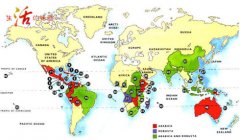
Map of Global Coffee producing areas
1. Costa Rica Costa Rica 2. Cuba Cuba 3. Dominican Republic Dominican Republic 4. Ei Salvador El Salvador 5. Guadeloupe Guadeloupe 6. Guatemala Guatemala 7. Haiti Haiti 8. Honduras Honduras 9. Jamaica Jamaica 10. Martinique Martinique 11. Mexico Mosi
2014-07-09 Coffee producing area coffee producing area map coffee planting
Global coffee producing area-Dominica
The Dominican Republic (DominicanRepublic) is adjacent to Haiti, and both own the island of Hispaniola (Hispaniola). In the early 18th century, coffee was grown in the Dominican Republic. Coffee production in the Dominican Republic: the best coffee producer in the Dominican Republic is the Barahona region in the southwest, but Juncalito
2014-07-09 Coffee origin Dominica boutique coffee
Global coffee producing area-Venezuela
Venezuela introduced coffee trees from Martinique as early as 1730, but coffee production was almost abandoned at the height of the oil industry. Recently coffee plantations have begun to recover, with original Tipica and bourbon coffee trees and new plantations.
2014-06-17 Coffee knowledge coffee origin Venezuela
Global coffee producing area-South Africa
The country's coffee trees originated in Kenya and are of excellent quality.
2014-06-17 Coffee knowledge coffee origin South African coffee coffee encyclopedia
Global coffee producing area-Tanzania
Due to political instability and rampant diseases and insect pests, the coffee industry in Tanzania has been damaged, leading to a decline in the overall level of coffee and instability in quality, which in turn lead to lower prices, which are usually the result of a further decline in the coffee industry. What's more, it is estimated that more than 12% of the Arabica coffee grown in northern Tanzania from 1969 to 1985 was smuggled.
2015-08-24 Global coffee origin Tanzania due to political instability coupled with diseases and insect pests
Global coffee producing area-Cameroon
The cultivation of Arabica coffee trees in Cameroon (Cameroon) began in 1913 as the Blue Mountain Coffee from Jamaica, but the country also produces large quantities of Robbins coffee.
2014-06-17 Coffee knowledge coffee origin coffee encyclopedia
Global coffee producing area-Vietnam
Perhaps under the influence of French colonial rule, coffee grown in Vietnam has a French flavor. Arabica coffee was first brought to Vietnam by French missionaries.
2014-06-17 Coffee knowledge coffee origin Vietnamese coffee coffee encyclopedia
Global coffee producing area-Nicaragua
In many countries, coffee production has been seriously affected for political reasons, and the coffee industry in Nicaragua is no exception.
2014-06-17 Coffee knowledge coffee origin coffee encyclopedia
Global coffee producing area-El Salvador
ElSalvador is one of the small countries in Central America with a dense population. The flavor of its coffee is characterized by excellent balance.
2014-06-17 Coffee knowledge coffee origin coffee encyclopedia
Global coffee producing area-Honduras
Coffee in Honduras is imported from El Salvador. Coffee production in Honduras increased significantly after the Brazilian frost in 1975, more than tripling in 20 years.
2014-06-17 Coffee knowledge Honduras coffee producing area
Global coffee producing area-India
There are several reasons why Indian coffee is popular with coffee lovers, but the most important is a process used on coffee beans, often referred to as the "monsooning" process.
2014-06-17 Coffee knowledge coffee origin Indian coffee coffee encyclopedia
Global coffee producing area-Zaire
The high-quality coffee produced in Zaire is dwindling, but the taste of Zaire coffee is still excellent. The origin of coffee in Zaire: the best Zaire coffee is grown in the north-east of the country, especially in the provinces of Oriental and Kivu, where excellent beans and giant beans have been produced in the past. Minority of Zaire
2014-07-09 Coffee origin Zaire boutique coffee origin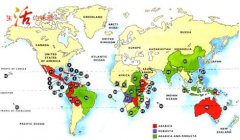
General knowledge of boutique coffee beans map of global coffee producing areas
Coffee trees grow in tropical or subtropical agricultural gardens centered around the equator and called coffee belts. Most of the coffee production is between the Tropic of Cancer, 25 degrees north of the tropical or subtropical equator and 30 degrees south of the equator. An area with an annual average temperature of 16-25 degrees Celsius, no Frosts Descent and rainfall of 1600-2000 mm.
2014-11-22 Coffee knowledge boutique coffee beans coffee common sense coffee origin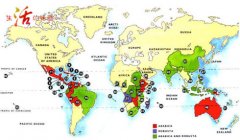
Coffee training knowledge: global Coffee producing area Map
Coffee trees grow in tropical or subtropical agricultural gardens centered around the equator and called coffee belts. Most of the coffee production is between the Tropic of Cancer, 25 degrees north of the tropical or subtropical equator and 30 degrees south of the equator. An area with an annual average temperature of 16-25 degrees Celsius, no Frosts Descent and rainfall of 1600-2000 mm.
2014-10-08 Coffee knowledge coffee distribution coffee origin